
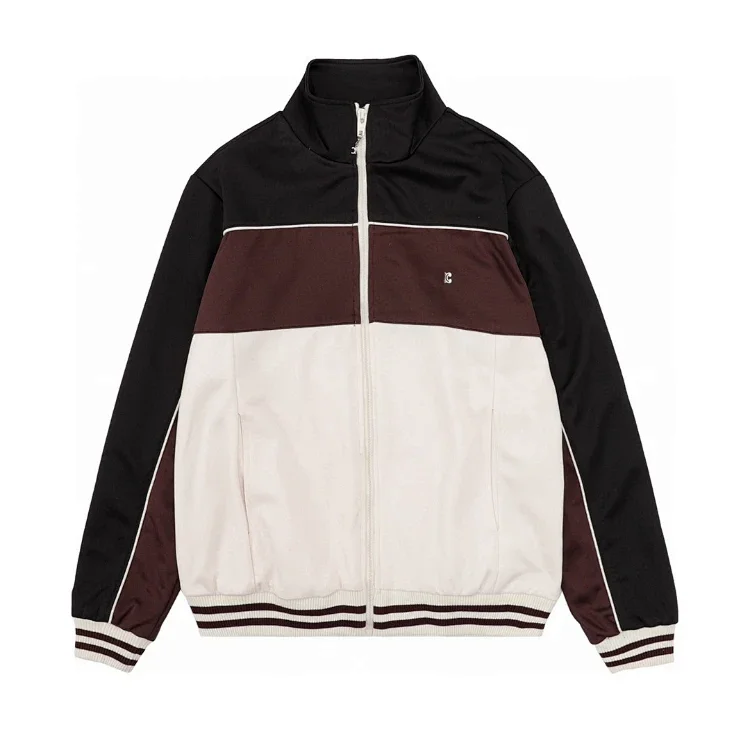
Start with a jacket that fits the way you plan to wear this one
Take a jacket out of your wardrobe and try it on over the layer you expect to wear. A light denim jacket over a T-shirt is a useful reference for another unlined spring jacket. For a winter jacket, use a coat you can already fasten over your usual jumper. Close it, sit down and reach forward as if holding a steering wheel. Notice where it pulls or rides up. Those observations tell you which measurements deserve most attention when you open a Hacoo listing.
Choose one thing you want to keep and one you would change. You might like the chest room but want a shorter hem for cycling. Or the jacket may fit well standing up while the cuffs slide well above your wrists whenever you reach. Write those points next to the figures you measure. Later, if two sizes both look plausible in the chart, that short note will help you decide which compromise you can actually live with.
Separate chest width, chest circumference and body measurements
Zip or button the reference jacket and lay it on a firm surface. Smooth the fabric without stretching it or pressing heavy padding flat. For a common flat chest measurement, measure straight across from one underarm to the other. Write down the height of the tape and whether the garment was closed. If the listing’s diagram takes its measurement a few centimetres below the armholes, repeat yours at that point. A tapered body can give a different number when the tape moves down.
On a simple jacket, a flat chest width of 56 cm corresponds to roughly 112 cm around the outside at that level. This conversion helps you compare a flat measurement with a finished-garment circumference measured at the same point. A chart headed “body chest 96–101 cm” describes the person the maker has in mind. Dividing that range in half and matching it against the flat jacket would compare your body with fabric that already includes room for movement and layers.
Look for the drawing or an explicit definition when a column says only “chest” or “bust”. If a shop shows both inches and centimetres, use one unit throughout. When the diagram or the units are missing, ask for the closed garment’s width between the underarms in the size you are considering. Specifying the two endpoints makes a useful answer much more likely than asking whether the jacket runs small.
Check sleeves with the right starting point
For an ordinary set-in sleeve, measure from the shoulder seam to the end of the cuff, following the upper side of the sleeve. Record whether your cuff was folded or extended. Then measure across the back from one shoulder seam to the other. A dropped shoulder starts its sleeve further down the arm. A shorter sleeve number on that cut can reach just as far on your wrist as a longer number on a narrower shoulder.
A raglan jacket has a diagonal seam running toward the neck. If its chart measures from the centre back neck to the cuff, use that same point on a reference jacket with a similar construction. Keep the tape along the indicated path and let the arm lie naturally. Adding a full shoulder width to a sleeve length would count both sides of the jacket for a one-arm measurement. When the seller and your reference use different methods, ask for a comparable measurement or choose another reference.
For back length, follow the seller’s starting point. The seam where the collar joins the body gives a different result from the top of a standing collar. If a parka has a longer back hem, note the centre-back length separately from the front. For an elastic bomber hem, record where it settles when worn as well as the flat length. A hem that catches high on the hip can make a generous chest feel surprisingly short.
Use two sizes to work through a real decision
Consider this illustrative comparison. Your unlined everyday jacket has a closed flat chest of 55 cm, back length of 66 cm and sleeves of 62 cm. It fits over a shirt, and the hem ends where you like it. A hypothetical listing gives size M as 54, 65 and 62 cm, and size L as 57, 67 and 63 cm, in the same order. These are made-up figures for reading a chart. They do not belong to a specific Hacoo product.
Compared with your jacket, M is 1 cm narrower across the front and 1 cm shorter at the back. L is 2 cm wider across the chest, 1 cm longer at the back and 1 cm longer in the sleeves. If your aim is a second light jacket for shirts, M stays close to the existing sleeve and hem lengths. But if the reference already pulls across your back when you reach, narrowing the chest makes M a less attractive candidate.
Now imagine that the seller describes the flat measurements as approximate with a possible variation of 1 cm. An advertised 54 cm could then be 53–55 cm, while 57 cm could be 56–58 cm. A difference of just 1 cm from your favourite jacket is no longer precise enough to settle the choice by itself. Check a second deciding feature, such as the space at the hem or the room in the upper sleeves. Apply a tolerance only when the actual listing gives one.
Allow for the lining, the layer and the way you move
Two jackets can measure 57 cm across the outside and give different amounts of room inside. Quilting and insulation occupy space. A woven lining can restrict the stretch you feel in the outer cloth. A thick hoodie also occupies more space around the upper arms and shoulders than a shirt. When a listing offers both padded and unlined versions, check whether there is a different chart for each. Do not transfer an unlined sample’s measurements to the padded option without confirmation.
Try the intended base layer under the closest jacket you own. Close the front, reach forward to a shelf, bend your elbows and sit down. If the front rises while the sleeves and back remain comfortable, compare the hem width before deciding to size up. If your upper arms feel tight while the chest hangs loosely, ask for a flat upper-sleeve width in the relevant size. Extra chest room alone may never solve that fit problem.
Read the pictures for construction, then check the selected option
A photo of an open jacket can reveal a quilted lining, a drawcord at the hem or a knitted storm cuff. A side view may show whether the shoulder drops below the natural shoulder. Use those features to choose what to measure. A dramatic oversized silhouette in a model photograph is much less useful when the model’s height, worn size and fastening are unknown. Check where you would want the hem and cuff to land on your own reference garment.
Weight answers a different question. A heavy zip, a dense outer fabric or insulation can add weight without adding usable room. Packed shipping weight may also include a bag or carton. Leave weight out of the comparison between two jacket sizes unless the listing supplies garment measurements too. For the final check, select the exact colour, lining and size, then reread the chart. Some listing photos illustrate several versions while the option selector governs the item you would actually receive.
Keep a record you can use when the jacket arrives
Keep the selected item, size, options and measurement chart together. If you asked for an extra measurement, save the answer with its units and endpoints. On delivery, try the jacket over the intended layer before washing it or altering the cuffs. If fit differs from what you expected, lay it down and repeat the same measurements. A photo showing both ends of the tape with the jacket closed communicates more than a close-up of one number.
Identify the exact difference before contacting the service where you placed the order. A jacket labelled L when the confirmation shows M is a different issue from a correctly labelled M that fits differently from your preference. Hacoo’s help page asks for the size label, the barcode on the product bag and a description of the affected area for a size concern. Follow the instructions attached to your own order, and keep the label and bag while the issue is being assessed.